
User:Senka/Almost Final Graduation Presentation: Difference between revisions
No edit summary |
|||
| (14 intermediate revisions by the same user not shown) | |||
| Line 1: | Line 1: | ||
==Urgency I started from | * your individual contributions to the special issues, | ||
* the development of your reading/writing practice across the 2 years, | |||
* the development of your prototyping practice across the 2 years, | |||
* your thesis (only a brief overview for context, as this has been assessed separately in depth), | |||
* your final work and research in the second year, | |||
* plans for final publication and grad show (with the understanding that you will continue to work on this after the assessment) | |||
<h1 style="font-family: Helvetica; color: #9300FF; font-size: 25px; text-shadow: 2px 2px 4px #F9B4FF, 2px 2px 4px #F9B4FF;">Special Issue 22</h1> | |||
<h2 style="font-family: Helvetica; color: white; font-size: 18px; background-image: linear-gradient(180deg, white, blue); padding: 5px;">Broadcast: Personal Accounts of Irreplaceable Lace</h2> | |||
<p> | |||
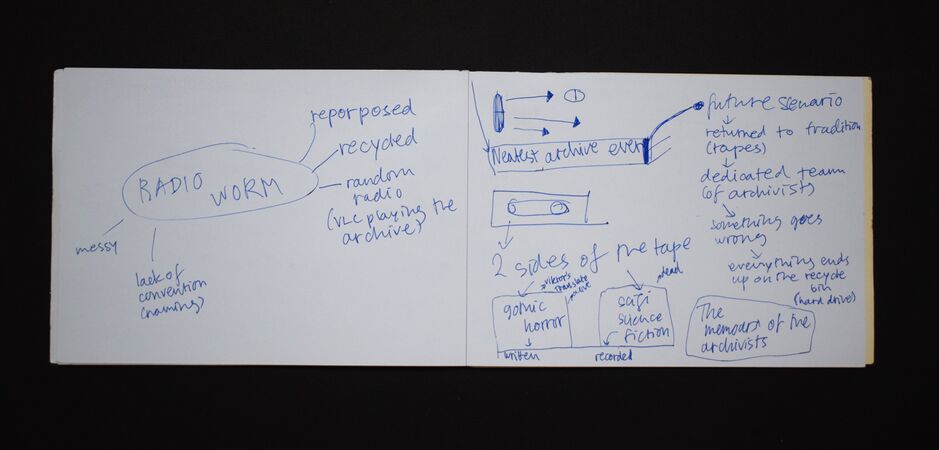
A speculative fiction broadcast about the 200 years of history seen through archivists' practices, media archeology and personal notes. <br> | |||
Investigating the role of fiction in an archival practice and taking inspiration from Saidiya Hartman's method of 'critical fabulation'.<br> | |||
Caretakers: Riviera, Victor, Senka | |||
</p> | |||
<gallery mode=packed heights=300px style="text-align: left;"> | |||
File:Mapping out the world-building.jpg|Mapping out the world-building | |||
File:Timeline of narrative.jpg|Timeline of the narrative | |||
File:Soundboard_2.png|Interface of the soundboard for the caretakers of week 7 | |||
</gallery> | |||
☞ Connected to: <span style="font-family: Helvetica; color: white; text-shadow: 1px 1px 7px blue, 1px 1px 7px blue"> fictioning, archival practices, writing </span> | |||
<h2 style="font-family: Helvetica; color: white; font-size: 18px; background-image: linear-gradient(180deg, white, blue); padding: 5px;">Byte Noise: Sound you see me, sound you don't</h2> | |||
<p> | |||
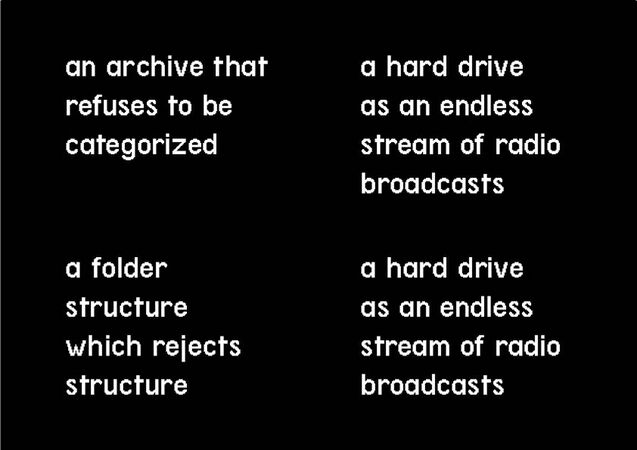
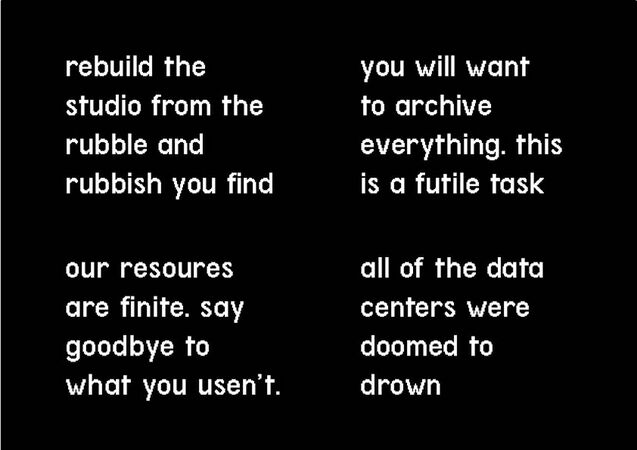
A 3D rendered video about digital storage, repurposing, radio Worm's studio space and clutter made with Lorenzo. <br> | |||
My role focused on making the 3D model and editing a script text that would give the video narrative meaning. The 3D model I made in blender, shared with Lorenzo as an obj file and coded with three.js for web use (the last bit is a bit in process still). | |||
</p> | |||
{{video|mp4=https://pzwiki.wdka.nl/mw-mediadesign/images/b/b3/Worm_3621669-2706.mp4|style=width:100%;}} | |||
<gallery mode=packed heights=300px style="text-align: left;"> | |||
File:Curtain-1.jpg|alt=Byte Noise script text|Byte Noise script text | |||
File:Curtain-2.jpg|alt=Byte Noise script text|Each island of text was shown separately on the screen | |||
</gallery> | |||
<gallery mode=packed heights=300px> | |||
File:Byte 33.jpg|alt=Byte Noise: Sound you see me, sound you don't | |||
File:Byte 11.jpg|alt=Byte Noise: Sound you see me, sound you don't | |||
File:Byte 77.jpg|alt=Byte Noise: Sound you see me, sound you don't | |||
</gallery> | |||
☞ Connected to: <span style="font-family: Helvetica; color: white; text-shadow: 1px 1px 7px blue, 1px 1px 7px blue">Connected to: invisibility of data and processes, archival practices </span> | |||
<h1 style="font-family: Helvetica; color: #9300FF; font-size: 25px; text-shadow: 2px 2px 4px #F9B4FF, 2px 2px 4px #F9B4FF;">Special Issue 23</h1> | |||
<h2 style="font-family: Helvetica; color: white; font-size: 18px; background-image: linear-gradient(180deg, white, #9300FF); padding: 5px;">((In)ter)dependence</h2> | |||
<p> | |||
Editorial work that focused on spatial writing, multiple understandings and entry points to a text, as well as the experiential element of learning together. My contributions focused on bringing back the embodied relation to the readings and a spatial, concrete poetry approach to making sense of difficult definitions. | |||
</p> | |||
'''dependence''' | |||
when you can't go about it on your own | |||
└┅when you need┅┅┅┅┅┅to lean on┅┅┅┅depend on┅┅┅┅rely on┅┅survive with | |||
┏┅others┅┅loved ones┅┅strangers┅┅groups┅┅communities | |||
┇ | |||
┗┅resources┅┅material┅┅substantial┅┅substances┅┅help┅┅support┅┅mutual aid | |||
┏┅immaterial structures┅┅coping mechanisms┅┅ | |||
┇ | |||
┗┅abstract systems┅┅┅┅┅┅┅┅┅┅┅┅┅┓ | |||
┇ ┇ ┇ ┇ of education | |||
of justice ┛ ┇ ┇ ┗ of support | |||
of health ┛ ┗ of care | |||
'''in''' | |||
░░░░░░ ░░░░░░░░░░░░░░░░░░░░░░░░░░░░░░░░░░░░░░░░░░░░░░░░░░░░░░░░░░░░░░░░░░░░░░░░░░░░░░░░░░░░░░░░░░░░░ | |||
░ ░ ░ | |||
░ ░ <-- you are often not here ░░░░░░░░░░░░░░░░░░░░░░░░░░ ░░░░░░░░░░░░░░ ░░░░░░░░░░░░░░ ░ outside | |||
░ in ░ <-- isolated └───but instead in the space ░ between ░ categories ░ ░ topologies ░ ░ | |||
░ ░ <-- apart from ░░░░░░░░░░░░░░░░░░░░░░░░░░ ░░░░░░░░░░░░░░ ░░░░░░░░░░░░░░ ░ | |||
░ ░ <-- inside of ░ | |||
░░░░░░ ░░░░░░░░░░░░░░░░░░░░░░░░░░░░░░░░░░░░░░░░░░░░░░░░░░░░░░░░░░░░░░░░░░░░░░░░░░░░░░░░░░░░░░░░░░░░░ | |||
░░░░░░░░░░░░░░ ░░░░░░░░░░░░░ ░░░░░░░ | |||
░ ░ ░ ░ ░ ░ | |||
the space between categories is erased | |||
░ ░ ░ ░ ░ ░ | |||
░░░░░░░░░░░░░░ ░░░░░░░░░░░░░ ░░░░░░░ | |||
'''care''' <br> | |||
Care is a loaded term. It's being thrown around a lot these days in the arts and design sphere; everyone is talking about facilitation with care, curation with care, designing with care... The term 'care' has it's own difficult medical history. Especially for folks with disabilities, the associations with care and the medical-industrial system is often grim, riddled with abuse, and uneven power dynamics. The term cannot be simply tossed around (imho) without a sense of a dedication to it. But equally, because of its grim history, disability justice activists have often turned towards using interdependence instead to emphasize a world we can all work towards. One in which relying on each other and building networks of care, is more important than independence. | |||
☞ Connected to: <span style="font-family: Helvetica; color: white; text-shadow: 1px 1px 7px blue, 1px 1px 7px blue"> reading approaches, spaces for learning </span> | |||
<h2 style="font-family: Helvetica; color: white; font-size: 18px; background-image: linear-gradient(180deg, white, #9300FF); padding: 5px;">Sick Host</h2> | |||
<p> | |||
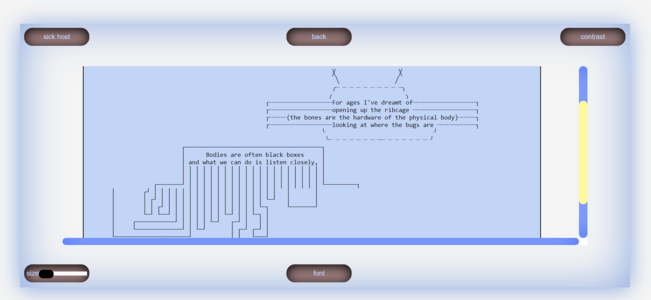
A non-linear, web folder essay on the technical and social implication of hosting while chronically ill. Inspired by the Glitch Feminism Manifesto, the Feminist Server Wishlist and folder poetry (poetry created in terminal folder structures). | |||
</p> | |||
<gallery mode=packed heights=200px style="text-align:left;"> | |||
File:Sick host1.png|alt=Sick host errors|Sick host errors | |||
File:Sick Host.png|One of the pages | |||
</gallery> | |||
<gallery mode=packed heights=200px style="text-align:left;"> | |||
File:Sick host3.png|alt=Sick host font change|Sick host font change feature | |||
File:Sick host5.png|alt=Sick host font change feature|Sick host font change feature | |||
</gallery> | |||
<gallery mode=packed heights=300px style="text-align:left;"> | |||
File:Kitchen123.jpg|thumb|alt=Kitchen coutner|Kitchen coutner unedited | |||
File:Kitchen-p.jpg|thumb|alt=Kitchen counter edited|Kitchen counter dithered | |||
</gallery> | |||
[[File:Miaoye que's folder poem imagine if.png|500px|thumb|none|alt=Miaoye que's folder poem imagine if|Miaoye que's folder poem imagine if]] | |||
Quotes from inspiration from the classes with Alice and Cristina, as well as my own sources: | |||
* "A [physical, social, infrastructural…] body is a thing that needs" – Johanna Hedva, To Those Mad, Sick, Crip Selves | |||
* "Sickness, in general, is parasitic." / "What is a parasite? An operator, a relation. This simple arrow intercepts. It intercepts organic messages in a living system, Noise, perhaps, but language as well, often living. All doctors have the same profession, we see. Let them speak, cut, give injections... they live and eat from the same profession. What is a parasite? A deviation, minimal to begin with, that can remain so until it disappears or that can grow until it transforms a physiological order into a new order. All sickness, all medicine, is parasitic in this new way." - Michel Serres, The Parasite | |||
* “Pravda je kao zdravlje, misliš o njoj kad je nema, i zaista je neodređena, ali je možda najviše želja da se udavi nepravda, a ona je vrlo određena. Svaka nepravda je jednaka, a čovjeku se čini da je najveća koja je njemu učinjena. A ako mu se čini, onda i jeste tako, jer se ne može misliti tuđom glavom.” - Meša Selimović, Derviš i Smrt | |||
* "A feminist server… Takes the risk of exposing her insecurity ... Tries hard not to apologize when she is sometimes not available” - A FEMINIST SERVER | |||
☞ Connected to: <span style="font-family: Helvetica; color: white; text-shadow: 1px 1px 7px blue, 1px 1px 7px blue">Connected to: fictioning, archival practices, writing </span> | |||
<h2 style="font-family: Helvetica; color: white; font-size: 18px; background-image: linear-gradient(180deg, white, #9300FF); padding: 5px;">TL;DR—too log didn't read</h2> | |||
<p> | |||
A project which aimed to make sense of the hidden labour that goes on in a feminist server through annotated log files and unlogged activity. Created with Thijs and Rosa. <br> | |||
My focus was on writing the annotation in a way that offered a didactic understanding of the operations running, as well as still be fun to read. Aside from this I was using Inkscape to generate the cover image and think about the interface and design. | |||
</p> | |||
{|style="margin: 0 auto;" | |||
|[[File:si23_tldr_lasercutting_sketch_1.jpeg|thumb|upright=1.25|Sketch of lasercutting file]] | |||
|[[File:si23_tldr_lasercutting_sketch_2.jpeg|thumb|upright=1.25|Sketch of lasercutting file]] | |||
|- | |||
|[[File:si23_tldr-lasercutting_final_file_1.jpeg|thumb|upright=1.25|Final lasercutting file]] | |||
|[[File:si23_tldr_lasercutting_final_file_2.jpeg|thumb|upright=1.25|Final lasercutting file]] | |||
|} | |||
<gallery mode=packed heights=200px style="text-align:left;"> | |||
File:Cover1212.jpg | |||
File:Cover3.jpg | |||
File:Cover10.png | |||
File:Cover13.jpg | |||
</gallery> | |||
<gallery mode=packed heights=200px style="text-align:left;"> | |||
File:Tldr.jpg|thumb|alt=TL;DR Special Issue launch. Photo by Thijs.|TL;DR Special Issue launch. Photo by Thijs. | |||
File:Tldr1.jpg|thumb|alt=The shelf infrastructure with chopchop and the e-reader. Photo taken by Thijs.|The shelf infrastructure with chopchop and the e-reader. Photo taken by Thijs. | |||
</gallery> | |||
☞ Connected to: <span style="font-family: Helvetica; color: white; text-shadow: 1px 1px 7px blue, 1px 1px 7px blue"> invisibility of data and processes, archival practices </span> | |||
<h1 style="font-family: Helvetica; color: #9300FF; font-size: 25px; text-shadow: 2px 2px 4px #F9B4FF, 2px 2px 4px #F9B4FF;">Special Issue 24</h1> | |||
<h2 style="font-family: Helvetica; color: white; font-size: 18px; background-image: linear-gradient(180deg, white, #9300FF); padding: 5px;">Fly on the Wall</h2> | |||
This is a device built to counter mosquito devices and prolong possible periods of loitering. <br> | |||
Mosquito devices emit high frequencies and are installed by private companies and individuals to specifically target and drive away youth from hanging out. They can cause nausea, ear pain and overstimulation, and some activists have called it a 'sonic weapon'. They're frequently installed in liminal spaces, which are fruitful places for loitering and socializing. <br> | |||
The 'Fly on the Wall' device mimics how a mosquito works to cancel out its effects, and make room for youth to loiter without disruptions. <br> <br> | |||
<gallery mode=packed heights=200px style="text-align:left;"> | |||
File:Tinkercad 3d model.png|alt=tinkercad 3d model|tinkercad 3d model | |||
File:Tinkercad 3d model-1.png|alt=tinkercad 3d model from a different angle | |||
File:Tinkercad 3d model-2.png|alt=tinkercad 3d model from yet a different angle | |||
</gallery> | |||
[[File:Fly_on_the_wall.jpg|thumb|finished prototype]] | |||
=Reading/Writing= | |||
* Creating non-linear points of entry into a text | |||
* Creating experimental reading methods | |||
* Finding ways to bridge the personal and political with immersive writing techniques | |||
=Prototyping= | |||
* Repurposing the existing technology in second hand devices | |||
* Creating gadgets and 3D printing | |||
* Having more performative prototypes of a project (as iterations of it) | |||
* Taking some of the more text based methods (such a critical fabulation) and using it to prototype in a different medium (3d modelling) | |||
=Urgency I started from= | |||
The urgency I started with is twofold: | The urgency I started with is twofold: | ||
1. Queers in the Balkans are often labelled as ‘imported from the rotten West.’ They’re not seen as a local concern. | 1. Queers in the Balkans are often labelled as ‘imported from the rotten West.’ They’re not seen as a local concern. | ||
| Line 6: | Line 155: | ||
Through this project, my aim was to both counter these notions and explore what the political imaginary of queerness in the Balkans could be. | Through this project, my aim was to both counter these notions and explore what the political imaginary of queerness in the Balkans could be. | ||
=What the project was conceptualized as= | |||
A non-linear game that makes use of non-linear time (time-travel, loops in space-time). The player doesn’t merely travel through space but across time as well to encounter fragments of queer Balkan pasts. In this thorny journey, the archival information about these pasts is embedded into the narrative through 3D models and audio snippets. | A non-linear game that makes use of non-linear time (time-travel, loops in space-time). The player doesn’t merely travel through space but across time as well to encounter fragments of queer Balkan pasts. In this thorny journey, the archival information about these pasts is embedded into the narrative through 3D models and audio snippets. | ||
<gallery mode=packed heights=300px style="text-align:left;"> | |||
File:Baggage-claim-2.png | |||
File:Baggage-claim-9.png | |||
</gallery> | |||
=Findings that changed how I thought about the project= | |||
There was not as much shunning of queer people as I had initially believed there to be. But there was a continual amnesia in regard to queer people ever existing in the region. Miloje Avramović, a trans/intersex man is one such example, he transitioned medically in 1937, yet all the way in the 70s trans people were labelled and called ‘the first of their kind.’ Reading Ariella Azoulay’s Unlearning Imperialism and familiarizing myself with ‘imperialism’s pursuit of the new,’ I saw a parallel between claiming new land and labelling people as new in order to sever our relationships with past knowledges. This act I called an imperial prescription. | There was not as much shunning of queer people as I had initially believed there to be. But there was a continual amnesia in regard to queer people ever existing in the region. Miloje Avramović, a trans/intersex man is one such example, he transitioned medically in 1937, yet all the way in the 70s trans people were labelled and called ‘the first of their kind.’ Reading Ariella Azoulay’s Unlearning Imperialism and familiarizing myself with ‘imperialism’s pursuit of the new,’ I saw a parallel between claiming new land and labelling people as new in order to sever our relationships with past knowledges. This act I called an imperial prescription. | ||
<gallery mode=packed heights=300px style="text-align:left;"> | <gallery mode=packed heights=300px style="text-align:left;"> | ||
| Line 23: | Line 176: | ||
Third genders in service of the patriarchy, virdžine and keeping land in the family. When people who live outside of the gendered norm align with the ideology of the state it doesn’t mean they will be looked on with pride in the future. | Third genders in service of the patriarchy, virdžine and keeping land in the family. When people who live outside of the gendered norm align with the ideology of the state it doesn’t mean they will be looked on with pride in the future. | ||
<gallery mode=packed heights=300px style="text-align:left;"> | |||
File:Promena-pola-1937-13-10-politika-001-1024x805.jpg|Politika's article (in Serbo-Croatian) on Miloje | |||
File:8 (2).jpg|Photo of an Albanian burrnesha (sworn virgins same as virdzine) | |||
File:Presuda J Mardešić 1944.png|The verdict of Josip Mardesic | |||
</gallery> | |||
The testing sessions provided granular information of how people relate to the game and what they want to explore. It became clear to me that people saw the game as an ‘open world’ game, and that a ‘rewarding’ mechanism of the game was to find new rooms and new things to discover in them. | The testing sessions provided granular information of how people relate to the game and what they want to explore. It became clear to me that people saw the game as an ‘open world’ game, and that a ‘rewarding’ mechanism of the game was to find new rooms and new things to discover in them. | ||
| Line 32: | Line 190: | ||
* Queers almost never benefit from aligning with the state, as their existences can be weaponized. | * Queers almost never benefit from aligning with the state, as their existences can be weaponized. | ||
=Mechanics of the game= | |||
==Sites== | |||
Each room of the game is a ‘site’ of memory. It starts at the airport as a site where gender and national identity are scrutinized, policed and defined, and moves on to historical sites which are connected by portals. | Each room of the game is a ‘site’ of memory. It starts at the airport as a site where gender and national identity are scrutinized, policed and defined, and moves on to historical sites which are connected by portals. | ||
<gallery mode=packed heights=200px style="text-align:left;"> | <gallery mode=packed heights=200px style="text-align:left;"> | ||
| Line 40: | Line 198: | ||
File:98.png | File:98.png | ||
File:99.png | File:99.png | ||
File:Baggage-claim-94.png | |||
File:Baggage-claim-6.png | |||
</gallery> | </gallery> | ||
Apart from the airport, the sites were built trying to apply critical fabulation to mediums beyond text. 3D modeling here builds lost worlds and renders them possible and present. | Apart from the airport, the sites were built trying to apply critical fabulation to mediums beyond text. 3D modeling here builds lost worlds and renders them possible and present. | ||
==The Forgotten Pioneer of Memory== | |||
The Forgotten Pioneer of Memory is a recurring figure in every room. She is supposed to be there as a safeguard, who gives some reassurance, as well as serve as a reminder of how pasts are re-written because “the political battle is a battle for the territory of collective memory.” | The Forgotten Pioneer of Memory is a recurring figure in every room. She is supposed to be there as a safeguard, who gives some reassurance, as well as serve as a reminder of how pasts are re-written because “the political battle is a battle for the territory of collective memory.” | ||
| Line 50: | Line 211: | ||
File:Pionika screenshoot.png|Early modelling based on the reference | File:Pionika screenshoot.png|Early modelling based on the reference | ||
File:99998.png|One of the models in Godot | File:99998.png|One of the models in Godot | ||
</gallery> | |||
<gallery mode=packed heights=400px style="text-align:left;"> | |||
File:Baggage-claim-91.png|The Forgotten Pioneer of Memory in game | |||
File:Baggage-claim-4.png|Pop up text when you walk into the pioneer | |||
</gallery> | </gallery> | ||
This character is based off a keychain of a pioneer girl I got in a secondhand shop in Belgrade. Since it was made from cheap plastic, it continued to erode into a dilapidated shape that seemed very symbolic of the history of Yugoslavia. | This character is based off a keychain of a pioneer girl I got in a secondhand shop in Belgrade. Since it was made from cheap plastic, it continued to erode into a dilapidated shape that seemed very symbolic of the history of Yugoslavia. | ||
==Pop ups== | |||
I’ve included pop ups which ground you and give context to which historical period you are in. | I’ve included pop ups which ground you and give context to which historical period you are in. | ||
<gallery mode=packed heights= | <gallery mode=packed heights=200px style="text-align:left;"> | ||
File:Loading | File:Loading screens 0.png|Pop up for the 14th century site | ||
File:Loading | File:Loading screens 1.png|Pop up for the 2020 site | ||
</gallery> | </gallery> | ||
==Airport announcements== | |||
Parts of the thesis are spoken out loud in the game as airport announcements. They’re signaled by the floating sparkles, and they get activated once the player is close enough to trigger the audio to play. | Parts of the thesis are spoken out loud in the game as airport announcements. They’re signaled by the floating sparkles, and they get activated once the player is close enough to trigger the audio to play. | ||
<gallery mode=packed heights=300px style="text-align:left;"> | |||
File:Baggage-claim-93.png | |||
File:Baggage-claim-993.png | |||
</gallery> | |||
The idea behind this was to include an element of transmitting knowledge that feels both like eavesdropping, spreading queer knowledges through gossip, as well as uncovering something that has happened to you (you=an amalgamation of queer history). | The idea behind this was to include an element of transmitting knowledge that feels both like eavesdropping, spreading queer knowledges through gossip, as well as uncovering something that has happened to you (you=an amalgamation of queer history). | ||
The snippets (as well as the whole thesis) are written from the 2nd person perspective (e.g. ‘you go to the airport’) to make the player/reader feel the content of the journey on their skin, to feel narrative immersion. | The snippets (as well as the whole thesis) are written from the 2nd person perspective (e.g. ‘you go to the airport’) to make the player/reader feel the content of the journey on their skin, to feel narrative immersion. | ||
=Iterative approach of making public= | |||
The project exists in several different iterations. | The project exists in several different iterations. | ||
==Web== | |||
The first major way in which the game is made accessible is through a webpage. Many of the design decision were made to create a game that could be easily available online (low poly designs, compressed files and similar). | The first major way in which the game is made accessible is through a webpage. Many of the design decision were made to create a game that could be easily available online (low poly designs, compressed files and similar). | ||
[[File:Baggage-claim-0.png|800px|none|center|Landing page for the project Baggage Claim]] | [[File:Baggage-claim-0.png|800px|none|center|Landing page for the project Baggage Claim]] | ||
==USB== | |||
When talking to Marloes, I was brought to consider that more intimate modes of sharing this work can exist as well. | When talking to Marloes, I was brought to consider that more intimate modes of sharing this work can exist as well. | ||
Which is why I also flashed a version of the game on USB drives and created a keychain of the Pioneer of Forgotten Memory to accompany it. With this instance of the game, it could be spread offline, from one hand of a player, to another. | Which is why I also flashed a version of the game on USB drives and created a keychain of the Pioneer of Forgotten Memory to accompany it. With this instance of the game, it could be spread offline, from one hand of a player, to another. | ||
ADD PHOTOS | |||
==Performance== | |||
I did a performance in drag at Brienenoord Buitenplaats, to test out how portions of the thesis that will be spoken in game sound when spoken out loud. This also brought me to shift more towards the voice. | I did a performance in drag at Brienenoord Buitenplaats, to test out how portions of the thesis that will be spoken in game sound when spoken out loud. This also brought me to shift more towards the voice. | ||
<gallery mode=packed heights=300px style="text-align:left;"> | |||
File:Brienenoord performance.png|Brienenoord thesis reading in drag | |||
File:Brienenoord performance 1.png | |||
File:Brienenoord performance 2.png | |||
File:Brienenoord performance 3.png | |||
</gallery> | |||
Preceding this, for the second public moment Thijs and I made use of queueing for our project. In this moment, I also started to ask for identification before people enter to play the game. The queue and implementing some of the hostile policing strategies that the game addresses became performative acts. | Preceding this, for the second public moment Thijs and I made use of queueing for our project. In this moment, I also started to ask for identification before people enter to play the game. The queue and implementing some of the hostile policing strategies that the game addresses became performative acts. | ||
==Thesis== | |||
The thesis serves as a backbone and a script of the project. The content it writes about is what the game is based on. It writes about queer histories using Saidiya Hartman’s method of Critical Fabulation, trying to expand the borders of what is seen in the archival document, image or video. (Saidiya Hartman’s method which uses historical information, archival material and fiction to do reparative work in the archives.) | The thesis serves as a backbone and a script of the project. The content it writes about is what the game is based on. It writes about queer histories using Saidiya Hartman’s method of Critical Fabulation, trying to expand the borders of what is seen in the archival document, image or video. (Saidiya Hartman’s method which uses historical information, archival material and fiction to do reparative work in the archives.) | ||
The thesis also exists as a printed publication, which mimics the design of a passport. This was not my initial intention, but after seeing the how much traction the thesis got during the public moments and reading portions of it from my own passport, it needed to be fleshed out as a printed publication. | The thesis also exists as a printed publication, which mimics the design of a passport. This was not my initial intention, but after seeing the how much traction the thesis got during the public moments and reading portions of it from my own passport, it needed to be fleshed out as a printed publication. | ||
<gallery mode=packed heights=300px style="text-align:left;"> | |||
File:Thesis 1 1.jpg | |||
File:Thesis 2.jpg | |||
</gallery> | |||
The design and adaptation of iconography of the two headed eagle which looks both East and West, was changed to represent less patriarchal ideal of strength and perseverance into a two headed chicken which could feed a nation. | The design and adaptation of iconography of the two headed eagle which looks both East and West, was changed to represent less patriarchal ideal of strength and perseverance into a two headed chicken which could feed a nation. | ||
Latest revision as of 15:21, 7 June 2025
- your individual contributions to the special issues,
- the development of your reading/writing practice across the 2 years,
- the development of your prototyping practice across the 2 years,
- your thesis (only a brief overview for context, as this has been assessed separately in depth),
- your final work and research in the second year,
- plans for final publication and grad show (with the understanding that you will continue to work on this after the assessment)
Special Issue 22
Broadcast: Personal Accounts of Irreplaceable Lace
A speculative fiction broadcast about the 200 years of history seen through archivists' practices, media archeology and personal notes.
Investigating the role of fiction in an archival practice and taking inspiration from Saidiya Hartman's method of 'critical fabulation'.
Caretakers: Riviera, Victor, Senka
Mapping out the world-building

Timeline of the narrative

Interface of the soundboard for the caretakers of week 7


☞ Connected to: fictioning, archival practices, writing
Byte Noise: Sound you see me, sound you don't
A 3D rendered video about digital storage, repurposing, radio Worm's studio space and clutter made with Lorenzo.
My role focused on making the 3D model and editing a script text that would give the video narrative meaning. The 3D model I made in blender, shared with Lorenzo as an obj file and coded with three.js for web use (the last bit is a bit in process still).
Byte Noise script text
Each island of text was shown separately on the screen


☞ Connected to: Connected to: invisibility of data and processes, archival practices
Special Issue 23
((In)ter)dependence
Editorial work that focused on spatial writing, multiple understandings and entry points to a text, as well as the experiential element of learning together. My contributions focused on bringing back the embodied relation to the readings and a spatial, concrete poetry approach to making sense of difficult definitions.
dependence
when you can't go about it on your own
                                    └┅when you need┅┅┅┅┅┅to lean on┅┅┅┅depend on┅┅┅┅rely on┅┅survive with
  ┏┅others┅┅loved ones┅┅strangers┅┅groups┅┅communities
  ┇
  ┗┅resources┅┅material┅┅substantial┅┅substances┅┅help┅┅support┅┅mutual aid
     ┏┅immaterial structures┅┅coping mechanisms┅┅
     ┇
     ┗┅abstract systems┅┅┅┅┅┅┅┅┅┅┅┅┅┓
                ┇ ┇ ┇ ┇             of education
     of justice ┛ ┇ ┇ ┗ of support
        of health ┛ ┗ of care
in
░░░░░░ ░░░░░░░░░░░░░░░░░░░░░░░░░░░░░░░░░░░░░░░░░░░░░░░░░░░░░░░░░░░░░░░░░░░░░░░░░░░░░░░░░░░░░░░░░░░░░
░    ░                                                                                             ░
░    ░ <-- you are often not here ░░░░░░░░░░░░░░░░░░░░░░░░░░         ░░░░░░░░░░░░░░ ░░░░░░░░░░░░░░ ░ outside
░ in ░ <-- isolated           └───but instead in the space ░ between ░ categories ░ ░ topologies ░ ░
░    ░ <-- apart from             ░░░░░░░░░░░░░░░░░░░░░░░░░░         ░░░░░░░░░░░░░░ ░░░░░░░░░░░░░░ ░
░    ░ <-- inside of                                                                               ░
░░░░░░ ░░░░░░░░░░░░░░░░░░░░░░░░░░░░░░░░░░░░░░░░░░░░░░░░░░░░░░░░░░░░░░░░░░░░░░░░░░░░░░░░░░░░░░░░░░░░░

░░░░░░░░░░░░░░ ░░░░░░░░░░░░░ ░░░░░░░
░            ░ ░           ░ ░     ░
the space between categories is erased
░            ░ ░           ░ ░     ░
░░░░░░░░░░░░░░ ░░░░░░░░░░░░░ ░░░░░░░
care
Care is a loaded term. It's being thrown around a lot these days in the arts and design sphere; everyone is talking about facilitation with care, curation with care, designing with care... The term 'care' has it's own difficult medical history. Especially for folks with disabilities, the associations with care and the medical-industrial system is often grim, riddled with abuse, and uneven power dynamics. The term cannot be simply tossed around (imho) without a sense of a dedication to it. But equally, because of its grim history, disability justice activists have often turned towards using interdependence instead to emphasize a world we can all work towards. One in which relying on each other and building networks of care, is more important than independence.
☞ Connected to: reading approaches, spaces for learning
Sick Host
A non-linear, web folder essay on the technical and social implication of hosting while chronically ill. Inspired by the Glitch Feminism Manifesto, the Feminist Server Wishlist and folder poetry (poetry created in terminal folder structures).
Sick host errors

One of the pages


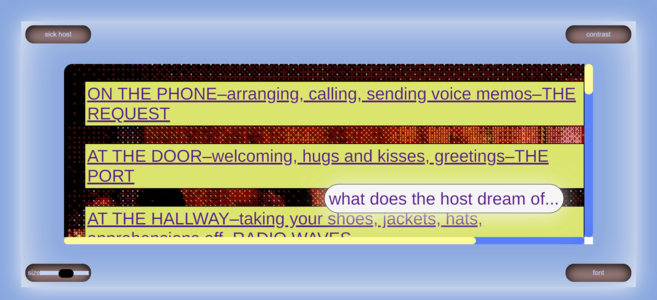
Sick host font change feature
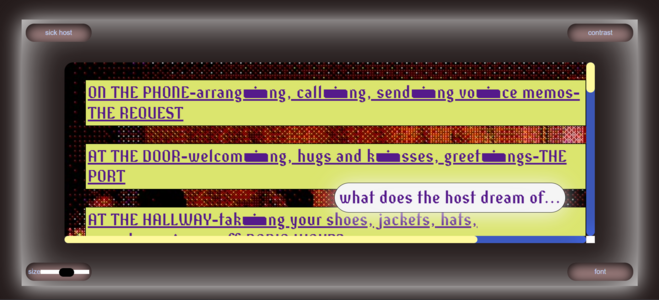
Sick host font change feature


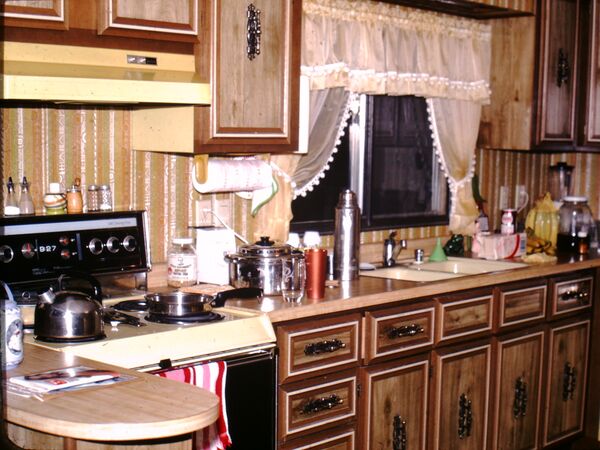
Kitchen coutner unedited
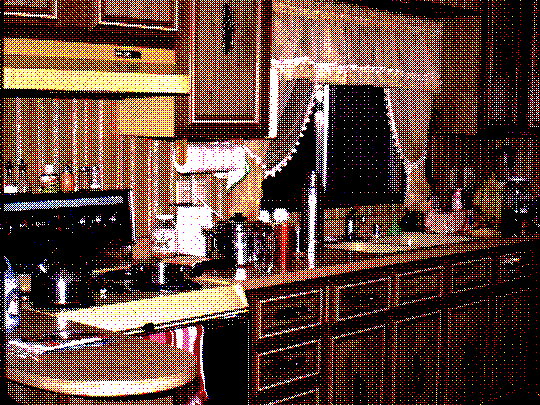
Kitchen counter dithered


Quotes from inspiration from the classes with Alice and Cristina, as well as my own sources:
- "A [physical, social, infrastructural…] body is a thing that needs" – Johanna Hedva, To Those Mad, Sick, Crip Selves
- "Sickness, in general, is parasitic." / "What is a parasite? An operator, a relation. This simple arrow intercepts. It intercepts organic messages in a living system, Noise, perhaps, but language as well, often living. All doctors have the same profession, we see. Let them speak, cut, give injections... they live and eat from the same profession. What is a parasite? A deviation, minimal to begin with, that can remain so until it disappears or that can grow until it transforms a physiological order into a new order. All sickness, all medicine, is parasitic in this new way." - Michel Serres, The Parasite
- “Pravda je kao zdravlje, misliš o njoj kad je nema, i zaista je neodređena, ali je možda najviše želja da se udavi nepravda, a ona je vrlo određena. Svaka nepravda je jednaka, a čovjeku se čini da je najveća koja je njemu učinjena. A ako mu se čini, onda i jeste tako, jer se ne može misliti tuđom glavom.” - Meša Selimović, Derviš i Smrt
- "A feminist server… Takes the risk of exposing her insecurity ... Tries hard not to apologize when she is sometimes not available” - A FEMINIST SERVER
☞ Connected to: Connected to: fictioning, archival practices, writing
TL;DR—too log didn't read
A project which aimed to make sense of the hidden labour that goes on in a feminist server through annotated log files and unlogged activity. Created with Thijs and Rosa.
My focus was on writing the annotation in a way that offered a didactic understanding of the operations running, as well as still be fun to read. Aside from this I was using Inkscape to generate the cover image and think about the interface and design.


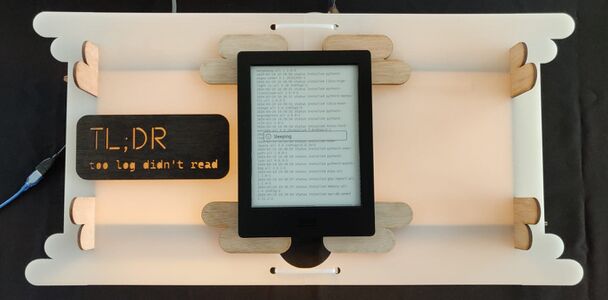
TL;DR Special Issue launch. Photo by Thijs.
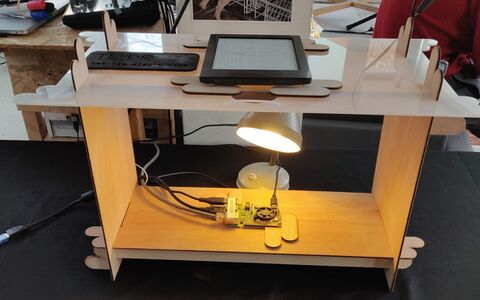
The shelf infrastructure with chopchop and the e-reader. Photo taken by Thijs.


☞ Connected to: invisibility of data and processes, archival practices
Special Issue 24
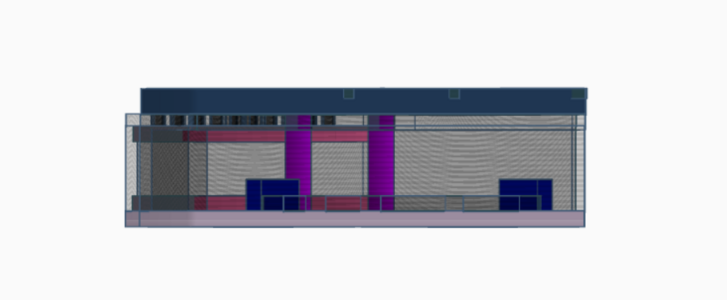
Fly on the Wall
This is a device built to counter mosquito devices and prolong possible periods of loitering.
Mosquito devices emit high frequencies and are installed by private companies and individuals to specifically target and drive away youth from hanging out. They can cause nausea, ear pain and overstimulation, and some activists have called it a 'sonic weapon'. They're frequently installed in liminal spaces, which are fruitful places for loitering and socializing.
The 'Fly on the Wall' device mimics how a mosquito works to cancel out its effects, and make room for youth to loiter without disruptions.
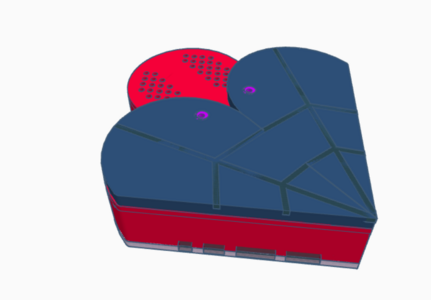
tinkercad 3d model
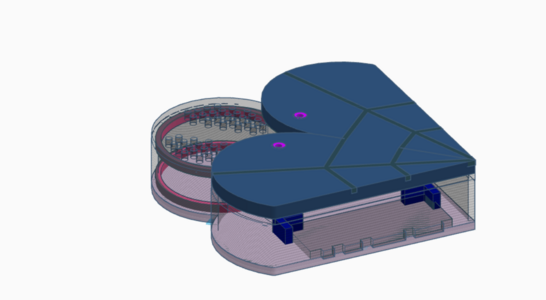


Reading/Writing
- Creating non-linear points of entry into a text
- Creating experimental reading methods
- Finding ways to bridge the personal and political with immersive writing techniques
Prototyping
- Repurposing the existing technology in second hand devices
- Creating gadgets and 3D printing
- Having more performative prototypes of a project (as iterations of it)
- Taking some of the more text based methods (such a critical fabulation) and using it to prototype in a different medium (3d modelling)
Urgency I started from
The urgency I started with is twofold: 1. Queers in the Balkans are often labelled as ‘imported from the rotten West.’ They’re not seen as a local concern. 2. The West being branded as a queer haven, while embracing a homonationalism, which perceives the rest of the world as the ‘backwards’, homophobic and transphobic other.
Through this project, my aim was to both counter these notions and explore what the political imaginary of queerness in the Balkans could be.
What the project was conceptualized as
A non-linear game that makes use of non-linear time (time-travel, loops in space-time). The player doesn’t merely travel through space but across time as well to encounter fragments of queer Balkan pasts. In this thorny journey, the archival information about these pasts is embedded into the narrative through 3D models and audio snippets.


Findings that changed how I thought about the project
There was not as much shunning of queer people as I had initially believed there to be. But there was a continual amnesia in regard to queer people ever existing in the region. Miloje Avramović, a trans/intersex man is one such example, he transitioned medically in 1937, yet all the way in the 70s trans people were labelled and called ‘the first of their kind.’ Reading Ariella Azoulay’s Unlearning Imperialism and familiarizing myself with ‘imperialism’s pursuit of the new,’ I saw a parallel between claiming new land and labelling people as new in order to sever our relationships with past knowledges. This act I called an imperial prescription.
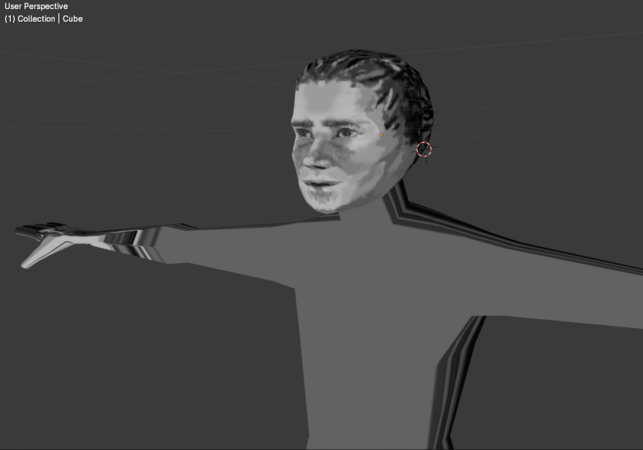
Miloje Avramovic blender render
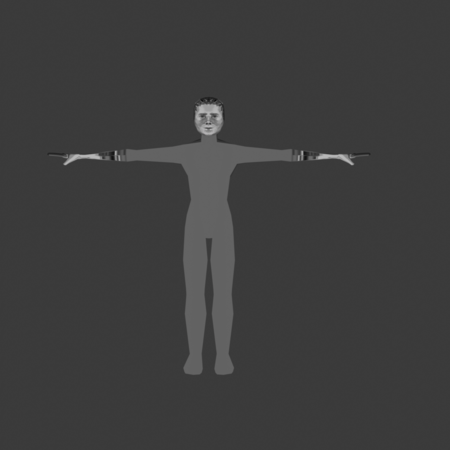

The only photo of Miloje

Miloje Avramovic's head texture painting based on the only photograph of him


Some information sparked a lot of speculation and wonder, such as discovering that same sex unions (similar to marriages) existed in the 14th century Serbian Slavonic church.
A lot of the information I was searching for was hard to find or in conditions that were difficult to decipher. A portion of my analysis could just be called ‘reading into the pixels’. This is what I was doing for instance when encountering the death sentence verdict of the partisan Josip Mardešić.
Third genders in service of the patriarchy, virdžine and keeping land in the family. When people who live outside of the gendered norm align with the ideology of the state it doesn’t mean they will be looked on with pride in the future.

Politika's article (in Serbo-Croatian) on Miloje

Photo of an Albanian burrnesha (sworn virgins same as virdzine)

The verdict of Josip Mardesic

.jpg)

The testing sessions provided granular information of how people relate to the game and what they want to explore. It became clear to me that people saw the game as an ‘open world’ game, and that a ‘rewarding’ mechanism of the game was to find new rooms and new things to discover in them.
Conclusions I came to:
- Archival knowledge can be disseminated in a game format, but a lot of translation needs to happen for it to legible.
- Accepting citizenship means accepting imperialism. It cements the idea of a binary gender system and enforces the oppressive forces that determine who gets to be called a citizen.
- Queers almost never benefit from aligning with the state, as their existences can be weaponized.
Mechanics of the game
Sites
Each room of the game is a ‘site’ of memory. It starts at the airport as a site where gender and national identity are scrutinized, policed and defined, and moves on to historical sites which are connected by portals.


Apart from the airport, the sites were built trying to apply critical fabulation to mediums beyond text. 3D modeling here builds lost worlds and renders them possible and present.
The Forgotten Pioneer of Memory
The Forgotten Pioneer of Memory is a recurring figure in every room. She is supposed to be there as a safeguard, who gives some reassurance, as well as serve as a reminder of how pasts are re-written because “the political battle is a battle for the territory of collective memory.”

Early modelling based on the reference
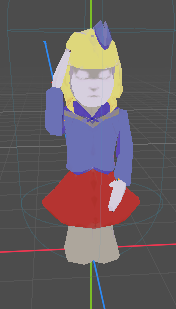
One of the models in Godot


The Forgotten Pioneer of Memory in game

Pop up text when you walk into the pioneer


This character is based off a keychain of a pioneer girl I got in a secondhand shop in Belgrade. Since it was made from cheap plastic, it continued to erode into a dilapidated shape that seemed very symbolic of the history of Yugoslavia.
Pop ups
I’ve included pop ups which ground you and give context to which historical period you are in.

Pop up for the 14th century site

Pop up for the 2020 site


Airport announcements
Parts of the thesis are spoken out loud in the game as airport announcements. They’re signaled by the floating sparkles, and they get activated once the player is close enough to trigger the audio to play.


The idea behind this was to include an element of transmitting knowledge that feels both like eavesdropping, spreading queer knowledges through gossip, as well as uncovering something that has happened to you (you=an amalgamation of queer history). The snippets (as well as the whole thesis) are written from the 2nd person perspective (e.g. ‘you go to the airport’) to make the player/reader feel the content of the journey on their skin, to feel narrative immersion.
Iterative approach of making public
The project exists in several different iterations.
Web
The first major way in which the game is made accessible is through a webpage. Many of the design decision were made to create a game that could be easily available online (low poly designs, compressed files and similar).

USB
When talking to Marloes, I was brought to consider that more intimate modes of sharing this work can exist as well. Which is why I also flashed a version of the game on USB drives and created a keychain of the Pioneer of Forgotten Memory to accompany it. With this instance of the game, it could be spread offline, from one hand of a player, to another.
ADD PHOTOS
Performance
I did a performance in drag at Brienenoord Buitenplaats, to test out how portions of the thesis that will be spoken in game sound when spoken out loud. This also brought me to shift more towards the voice.

Brienenoord thesis reading in drag


Preceding this, for the second public moment Thijs and I made use of queueing for our project. In this moment, I also started to ask for identification before people enter to play the game. The queue and implementing some of the hostile policing strategies that the game addresses became performative acts.
Thesis
The thesis serves as a backbone and a script of the project. The content it writes about is what the game is based on. It writes about queer histories using Saidiya Hartman’s method of Critical Fabulation, trying to expand the borders of what is seen in the archival document, image or video. (Saidiya Hartman’s method which uses historical information, archival material and fiction to do reparative work in the archives.)
The thesis also exists as a printed publication, which mimics the design of a passport. This was not my initial intention, but after seeing the how much traction the thesis got during the public moments and reading portions of it from my own passport, it needed to be fleshed out as a printed publication.


The design and adaptation of iconography of the two headed eagle which looks both East and West, was changed to represent less patriarchal ideal of strength and perseverance into a two headed chicken which could feed a nation.